




Blog

The Definitive Guide to EV Charging

EVs Charging
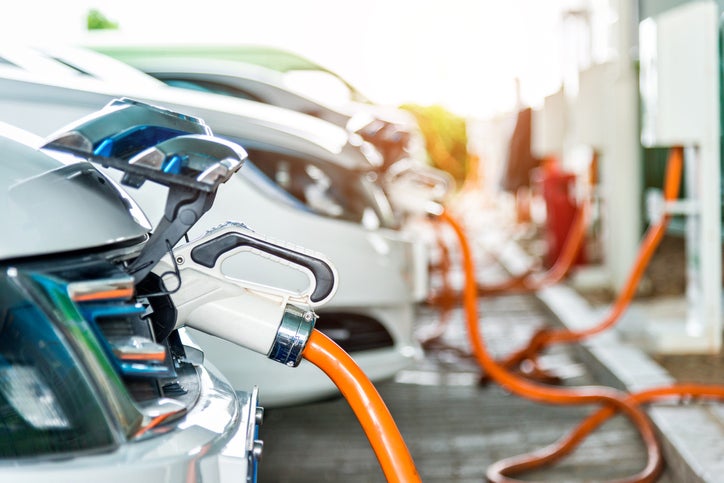
Electric cars are charging in station.

There are Levels to This
Ever since the first car was produced in 1886, internal combustion engines have been the driving force of vehicles. However, the search for an alternative has been underway for just as long and finally, we have an answer. Electric vehicles with electric motors.

Now, when most folks think of electric vehicles they imagine some futuristic-looking vehicle that will leave them stranded on the side of the highway with dead batteries — this couldn’t be more of a myth!

Electric vehicles, or EVs, have come a long way since the 1870s. They’re stylish, powerful, exciting to drive and most of all — reliable. Despite advances in EV technology, many people still doubt their practicality and cite range anxiety and lack of charging infrastructure.

This definitive guide to EV charging will teach you everything you need to know about EV charging, including how simple it is. Give this a quick read and then make sure to pay a visit to Jennings Chevrolet to check out the electrifying Bolt EV.

Level 1 Charging

The most accessible level of charging, Level 1 charging stations allow you to charge your EV by plugging it into your household 120V outlet. This means you’ll be able to use your vehicle's charger on any outlet in your residence, making charging a breeze.

Commonly referred to as “trickle charging”, level 1 is the slowest charging method available for EVs albeit one of the most convenient. You will see around four miles of range added to the vehicle each hour when using level 1 charging.

With a slow charging time, Level 1 is best utilized when you’re able to let your EV charge up overnight. That being said, there are a few other methods of charging that are faster if you’re in a rush, keep reading to find out what they are.

Level 2 Charging

One of the most common forms of EV charging, Level 2 charging can be found in both residential and public areas. It provides a much quicker charge than Level 1 chargers, adding up to 12-30 miles of range per hour. A full charge can be completed in 6-12 hours — depending on battery size — when using a Level 2 charger.

If you want a Level 2 charger at your home, it is plenty doable as long as you have an available 240V outlet. In the event you don’t have a 240V outlet, you must have one professionally installed before you are able to take advantage of Level 2 charging.

While most electric vehicles come with a Level 1 charging cable included, Level 2 chargers come at an extra cost. Simply ask your sales professional for pricing on a Level 2 charging cable and they should be able to provide you with one at delivery.

Looking to have a Level 2 charger installed at your house? Companies like ChargePoint and QMerit can help! Having a Level 2 charger installed at home will not only save you time but some money as well. In some cases, you may even be able to claim tax benefits for owning an EV and investing in a charger, refer to your local tax code for more info.

Level 3 Charging

Often referred to as DC Fast Charging, high-powered Level 3 chargers are only found at public charging stations across the country. They are the fastest and most-efficient way to charge your EV, as they add around 3-15 miles every minute!

Level 3 charging uses powerful direct current (DC) power, which is not found in residential areas as they use alternating current (AC). This means you won’t be able to have a Level 3 charging station at home, but if you do some Googling you may find one nearby.

The best benefit of Level 3 charging stations is their ability to charge your EV battery up to 80% capacity in a matter of minutes. This makes charging up during lunch break or while running errands a breeze and allows you to live a range-anxiety-free life.

As the popularity of EV’s continues to grow, you’ll start to see more and more Level 3 public charging stations popping up across the country. If you already own an EV, chances are you know all of your local charging stations — but if you don’t — check out Plugshare.

Stations Near You

Looking for somewhere to charge near you? No sweat, we took the time and did the research for you. If you’re in the Chambersburg area and need to charge your EV, we’ve put together a shortlist of available public charging stations. Check out what we found:

Computer Tutor Charging Station on 2492 Philadelphia Avenue, Chambersburg PA 17201

Caledonia State Park Charging Station on 101 Pine Grove Road, Fayetteville PA 17222

Cermak Professional Building Charging Station on 46 S Potomac Street, Waynesboro PA 17268

Romeo’s Pizza Charging Station on 66 Church Street, Mercersburg PA 17236

While this list doesn’t have every charging station in Chambersburg on it, it’s a great starting point for EV owners in Chambersburg. As time goes on and more people adopt electric vehicles, charging infrastructure should start to increase — so keep an eye out!

Charged Up and Ready to Go

Now that you know all there is to know about charging an EV, making the switch doesn’t seem so scary now, does it? Despite what your octane-loving, mechanic cousin may say, electric vehicles truly are the future. With more home-charging options available and increasing public charging infrastructure, range anxiety is nothing more than a myth.

Whether you opt for a home charging station or you rely on public infrastructure, switching to an EV is the best option for the planet and your wallet. Owning an EV not only saves you at the pump it also saves you on repair bills too, as they require less maintenance than traditional cars.

Are you ready to make the switch to an electric vehicle? Then Jennings Chevrolet can help! At Jennings Chevrolet, we have Chambersburg’s best selection of Chevrolet vehicles, including the new Bolt EV. Whether you’re switching to an EV or sticking with a traditional engine — if you want the best prices on Chevrolet vehicles — shop at Jennings Chevrolet.

Recommended Posts

2025 GMC Canyon vs. 2025 Chevrolet Colorado: A Head-to-Head Pickup Truck Showdown

Though the 2025 GMC Canyon and Chevrolet Colorado ride on a similar General Motors platform, they each bring unique elements. Let’s dive into how these midsize trucks differ in performance, design, tech, and overall utility.Performance and Powertrain 2025 GMC Canyon The GMC Canyon is powered by a turbocharged 2.7-liter inline-four engine, delivering 310 horsepower and 430 lb-ft of torque. It comes standard with an eight-speed automatic transmission and is available in both 2WD and 4WD configurations, except for certain trims like AT4 and Denali, which offer 4WD as standard. The maximum towing capacity is 7,700 pounds with the Elevation, AT4, and Denali trims, while the AT4X trims have a maximum towing capacity of 6,000 pounds.2025 Chevrolet Colorado The 2025 Chevy Colorado features a turbocharged 2.7-liter inline-four engine, delivering 310 horsepower and 430 lb-ft of torque, paired with an eight-speed automatic transmission. It is available in both rear-wheel drive (RWD) and 4WD configurations across trims such as WT, LT, Z71, and Trail Boss. Most trims offer a maximum towing capacity of 7,700 pounds, though the ZR2 and ZR2 Bison trims are limited to 6,000 pounds.Exterior Design and Customization 2025 GMC Canyon The new lineup adds three fresh paint options—Glacier Metallic, Desert Sun, and Rapids Metallic—replacing older colors. It also debuts the "Nightfall Edition Package" on the AT4 trim, featuring black accents, special badges, and rugged design elements. All trims now include LED lighting and updated styling.2025 Chevrolet Colorado The lineup adds a new Midnight Edition and two new colors, Reef Blue Metallic and Sunrise Orange, replacing options like Glacier Blue Metallic. The design focuses on rugged, practical styling, with off-road trims like the ZR2 and Trail Boss offering underbody protection and larger tires.Interior, Comfort, and Technology 2025 GMC Canyon All trims come standard with an 11.3-inch infotainment touchscreen featuring wireless Android Auto and Apple CarPlay. Higher trims offer luxury upgrades such as leather upholstery, a larger digital gauge cluster, wireless phone charging, and a premium Bose audio system. Optional upgrades available across trims include a head-up display, underbody cameras, and the comprehensive ProGrade Trailering System.2025 Chevrolet Colorado The vehicle comes standard with an 11.3-inch touchscreen, featuring wireless Apple CarPlay and Android Auto for seamless connectivity. Higher trims, such as the ZR2, offer premium upgrades like perforated leather seats, heated steering wheels, and wireless charging. Additional thoughtful features include standard rear seat storage and a lockable tailgate storage compartment available in select trims.Off-Road Capabilities 2025 GMC Canyon The AT4 and AT4X trims are designed for off-road enthusiasts, featuring lifted suspensions, skid plates, and off-road tires. For even greater rugged capability, the AT4X AEV Edition includes specialized off-road components.2025 Chevrolet Colorado The ZR2 and ZR2 Bison trims are built for serious off-road performance. They come equipped with Multimatic DSSV dampers, locking front and rear differentials, and 33-inch or 35-inch tires. The ZR2 Bison also includes underbody protection and functional rock sliders for added durability.Fuel Economy 2025 GMC Canyon Most 4WD models achieve an EPA-estimated fuel economy of 18 mpg in the city and 22 mpg on the highway. However, Canyon AT4X models equipped with mud-terrain tires have slightly lower efficiency, with 17 mpg in the city and 20 mpg on the highway.2025 Chevrolet Colorado The vehicle offers slightly better overall fuel efficiency, with RWD models achieving 20 mpg in the city and 24 mpg on the highway. For 4WD models, the ratings are 18 mpg in the city and 22 mpg on the highway, while the ZR2 Bison delivers 17 mpg in both city and highway driving.Pricing 2025 GMC Canyon The 2025 GMC Canyon starts at $39,995 for the base Elevation trim, offering a solid entry into the midsize truck segment. For those seeking a more premium experience, the fully-loaded Denali trim reaches a price of $67,030, bringing a host of luxury features and advanced technologies.2025 Chevrolet Colorado The 2025 Chevrolet Colorado provides a more budget-friendly option, with the base WT trim starting at $33,495. For buyers looking for something more off-road capable and feature-rich, the top-tier ZR2 Bison trim is priced at $62,895, offering a blend of rugged design and premium enhancements.Which Truck Fits Your Needs? The 2025 GMC Canyon and Chevrolet Colorado are raising the bar for midsize pickups with great performance, advanced tech, and versatile trims.The GMC Canyon offers premium interiors and a touch of luxury, while the Chevrolet Colorado shines with practicality, affordability, and rugged off-road options like the ZR2 Bison for adventure lovers.Whichever truck you choose, both models set a new standard in the midsize category. Still deciding? Let Jennings Chevrolet Buick GMC guide you! Our experienced team is dedicated to helping you find the perfect vehicle to match your lifestyle and budget. Whether you drive away in the GMC Canyon or Chevrolet Colorado, we’ll make sure you leave happy and confident in your purchase.Visit Jennings Chevrolet Buick GMC today for all your Chevy or GMC needs—we look forward to assisting you!

Chevy Blazer EV SS Breaks New Ground as the First Electric Pace Car at Daytona 500

The Daytona 500 this year ushers in a historic moment for NASCAR. For the first time ever, an electric vehicle will take the lead at the iconic race. Chevrolet makes a bold statement by unveiling the Chevy Blazer EV SS as the official Pace Car, highlighting the evolution of both racing and electric technology. This milestone represents a transformative shift in the world of motorsports.The Blazer EV SS Steals the Spotlight Chevrolet is no stranger to the Daytona 500 stage. This year marks the brand’s 16th time providing the pace car for the Great American Race. But what makes this moment truly revolutionary is the Chevy Blazer EV SS. This performance powerhouse showcases the cutting-edge potential of electric vehicles, not only for the road but for the racetrack.Packed with innovation, this high-performance EV is an all-wheel-drive beast with 615 horsepower and an astonishing 0-to-60 mph acceleration of just 3.4 seconds in its “Wide Open Watts” (WOW) mode. With the added precision of Brembo front brakes and a stiffer suspension for enhanced cornering, the Blazer EV SS is built for exceptional speed, agility, and control.Pace Car with a Purpose The Daytona 500 Pace Car plays a key role, leading the field during caution laps, stages, and before the race starts. This year, it’s making a bold statement about electrification in motorsports.Picture this: an EV quietly pacing ahead of roaring V8-powered race cars—a blend of tradition and progress, offering a glimpse into NASCAR’s electrified future.While the Blazer EV SS isn’t racing, its presence highlights Chevrolet’s commitment to sustainability and performance. As the fastest SS model Chevrolet has ever made, it shows the impressive potential of electric vehicles on and off the track.Evolution of the Chevy Blazer in Racing Chevrolet didn’t stop with the pace car. Alongside the Blazer EV SS, Chevy revealed the Blazer EV.R NASCAR Prototype—a 1,300-horsepower machine showcasing the future of all-electric NASCAR cars.This prototype shares its chassis with today’s NASCAR Cup cars but adds a tri-motor powertrain and a 78-kWh liquid-cooled battery. The Blazer EV.R has already completed laps at race speeds, suggesting electrified stock car racing could arrive soon.The connection between the Blazer EV SS Pace Car and the EV.R lies in innovation—one leads the way for electrified pace cars, while the other hints at NASCAR’s electric future.Why the Blazer EV SS Matters in NASCAR and Beyond The debut of the Chevy Blazer EV SS pace car is a milestone in automotive design, performance, and sustainability. As electrification grows in motorsports, NASCAR is taking a step toward the future with its first all-electric pace car. Racing series like Formula E and IMSA have already embraced EVs, and now NASCAR is joining the shift.The Blazer EV SS highlights Chevrolet’s commitment to innovation. From muscle cars to advanced EVs, Chevy continues to redefine performance and design. For NASCAR fans, EV enthusiasts, or anyone curious about the future of cars, the Blazer EV SS offers a glimpse into a cleaner, faster, and more sustainable world of racing—without losing the thrill.First Look at the Future For many NASCAR fans and auto enthusiasts, the Daytona 500 offers the first real-world opportunity to see the Blazer EV SS in action. While it’s set to hit dealerships later this quarter with a base price of $61,995, its dynamic performance at Daytona is sure to make an impression on anyone watching.This model is also loaded with advanced features for everyday use, including a 17.7-inch infotainment screen and GM’s Super Cruise hands-free driving technology. The pace car role isn't just about racing—it’s also about showing off what this EV can do in the real world.Final Lap Chevrolet’s Chevy Blazer EV SS is more than a pace car—it’s a symbol of innovation and proof that electrification and performance can go hand in hand.Leading the Daytona 500 field with its first all-electric pace car is another milestone for Chevrolet. For NASCAR, it’s a chance to showcase how electrification could transform racing.This historic debut raises a big question—could fully electric Cup cars be the future of Daytona? Time will tell.For now, one thing is clear—the Chevy Blazer EV SS is ready to lead the way into an exciting new era of motorsports.Want to know what makes the Blazer EV SS stand out in performance and sustainability? Visit Jennings Chevrolet Buick GMC today and take your own test drive of the 2025 Chevrolet Blazer EV and see what makes this EV fit for the racetrack. While the Blazer EV SS is made for the racetrack, the street model will still make you feel like you’re at the Daytona speedway with performance and power without paying at the pump. Our team is committed to helping you find the best deal possible on your new vehicle that makes every day feel as exciting as a NASCAR racetrack.We hope to see you soon at Jennings Chevrolet Buick GMC!

Got a Recall Notice? Here’s What You Should Do Next

Your safety behind the wheel is crucial, but what steps should you take if your vehicle gets recalled? Vehicle recalls are no joke, and it's essential to act fast. Stay informed and ready with our simple guide to help you navigate the process.What Exactly Is a Recall? A recall occurs when the National Highway Traffic Safety Administration (NHTSA) determines that a vehicle fails to meet essential safety standards. In response, the manufacturer must submit a detailed report outlining the affected vehicles, the specific equipment involved, a description of the defect, the reasoning behind the recall, and the steps for addressing the issue. Within 60 days of the recall, registered vehicle owners are required to receive a notice via first-class mail, which will provide instructions on how to fix the issue, the estimated repair timeline, and how long the process should take.Checking For a Recall According to the NHTSA website, searching by license plate is one of the newest and best ways to check for a recall. While manufacturers must notify registered vehicle owners in 60 days, physical mail can be unreliable. If you have suspicions of a recall or have seen news concerning a potential recall on your car’s make and model, searching the NHTSA website for a recall through your car’s license plate or Vehicle Identification Number (VIN) is the easiest and most efficient way to stay safe.What To Do When Your Car Is Recalled? Once you find out if the recall applies to your vehicle or parts, there are three options: repair, replace, or refund. By law, the manufacturer must choose one of the three options to correct the issue. If the manufacturer has chosen repair, your vehicle or part must be repaired by the manufacturer at no cost to the vehicle owner. Replacement means that if the problem can’t be fixed, the manufacturer must provide you with another similar or identical model. A refund option involves the manufacturer refunding the purchase price of your vehicle, minus depreciation. These options also apply to accessories such as car seats.Your recall letter or warning should notify you if your car is too dangerous to drive. Regardless, the recall issue should be resolved immediately by taking your vehicle to a local authorized dealership matching the make of your car. Remember, the bigger the recall, the longer the waitlist for an appointment.How to Book a Recall Repair Appointment at Jennings Chevrolet Buick GMC Recalls must be done at dealerships for recording purposes, quality monitoring, and making recalled parts available to manufacturers for inspection. While the NHTSA gives manufacturers a grace period for repairs to be made available after a recall, you should contact your local dealership to book an appointment as early as possible to beat the crowds. Establishing a friendly relationship with your local registered dealership can pay off during a difficult recall period! Has your vehicle been recalled? Call Jennings Chevrolet Buick GMC immediately to book your recall repair appointment and ensure your vehicle functions to its intended safety guidelines and performs its best. Our team is happy to help, from minor service to full recall assistance!